
The Woman Who Didn't Exist
By Mark Hay

The last time any of her writer clients remember seeing Melanie Mills alive, she’s on the porch of her ocean-view fixer-upper on an early Spring day — tangled blonde wig, Vaseline smile, a cigarette in one hand. When she's not smoking, she’s pounding down diet sodas. A small woman, maybe five feet and ninety pounds, somewhere in her mid-40s, her energy fills the porch anyway. She has big plans for the coming months, she tells the writer. Plans that could put her literary agency on the map.
Stanley Weinstock never visits Melanie on her porch. He's never even heard her voice. They've only emailed back and forth. But around the same time, she promises him big things will be coming his way this year as well.
Stanley has been waiting for his break for a long time. He retires in 1996, after 45 years as a New York City probation officer and social worker, and tells everyone he'll spend his golden years writing a book based on his experiences. It’s called Primary Client, and it’s a thriller about a psychologist haunted by his own childhood and a patient who turns up dead with a plastic sheet over his head. Turning five decades of case notes into an actual narrative that someone might want to read takes him three years, then the writing process takes another two. His failing health slows him down. When he finally sends his manuscript out to about a hundred agents, most of them pass on it. Melanie Mills does not.
She sees something in it, she tells him — though it needs work, and her kind of work doesn’t come cheap. "You can't afford me," she says, and then lets him talk her editorial rate down. He wires her a little over a thousand dollars. For more than a year, she sends him the occasional update: edits and dead ends. Then finally, she says that she's seen a flicker of interest from St. Martin’s Press. She’ll be out of town for a few weeks this spring, her assistant writes, but they'll be in touch when she is back.
Then, on a Monday morning at the start of the summer of 2003, an email lands in Stanley's inbox — and in the inboxes of dozens of writers like him, scattered across the country.
Melanie is dead.
A car accident, the assistant explains, during a trip to Europe to mourn a death in the family. All submissions have been pulled, all contracts reverted, all events canceled. “I’m very sorry,” the email closes. “Good luck to all of you.”
Suddenly, Stanley is back to square one — except now he is older, sicker, and out a thousand dollars. Does he have another hundred queries in him? Another round of edits, another stretch of interminable waiting? Is his novel, a lifetime in the making, simply dead in the water?
He catches himself. These are important questions, but Melanie has a family, and they must be grieving. So he buys a condolence card and mails it to her P.O. Box in North Myrtle Beach.
A few days later, it comes back. Unopened. Undeliverable.
Other writers reach out to the assistant — to offer sympathy and, carefully, ask what will become of their manuscripts. No one answers. Within the month, the assistant’s email is bouncing back messages and Melanie's’ website has vanished. Clients who once heard her mention a daughter, Lisa, go looking for her — for answers — but find nothing. There is no funeral. No obituary. One writer drives out to her neighborhood herself. The clerks at the post office know the name — she collected her mail every week, they say, right up until recently — but no one knows anything more about Melanie or where she’s gone.
A local police officer stops by her building as well, and says he finds a dumpster out back, packed with manuscripts.
As the oddities pile up, Stanley and the other writers find their grief edged out by a stranger question: Is Melanie really gone? Did she ever exist at all?
Over the coming months, they learn that the answers to those questions are no and no.
Melanie was just a character, inhabited for a time by another woman. The writers have spent years placing their trust, their literary futures, in the hands of a work of fiction. But even after this revelation, it takes them years to figure out who created Melanie Mills.

Melanie Mills, North Myrtle Beach
Victoria Strauss is a fantasy and historical fiction writer. She publishes her first book, The Lady of Rhuddesmere, a well-received Gothic mystery, in 1982. In 1998, she starts cataloging people who prey on aspiring writers. By the millennium, outside of her genre she's better known for Writer Beware, the watchdog site she's built to publicize her investigations into lit world scams: fee-skimming agents, vanity presses, editors who take writers' money and manuscripts then vanish.
Victoria first hears about Melanie around 2000, as a new agent on the scene who mainly works with first-time writers — dozens of them. But she doesn't raise any major red flags. Melanie doesn’t always ask for money up front. Her updates come weekly, like clockwork. “She actually managed to place a couple of books with smaller houses,” Victoria recalls.
On the phone, Melanie is upbeat and professional. She sometimes mentions that she is working on her own novel on the side. But when writers ask friendly questions about her personal life, she clams up. Victoria hears that she used to be an insurance agent out west, but no one knows exactly how she ended up in North Myrtle Beach or the literary world.
They don't have access to it now, but Melanie – or rather, the woman behind her - will eventually write a "memoir." It's "based on her life story" — with a few (unspecified) alterations and fabrications.
In it, she explains that she was indeed originally an insurance agent out in California, but she'd always had a writing habit. She's done a little editing and ghostwriting on the side, and has been tinkering with that novel for ages. In the late '90s, a friend connects her with an agent, who helps her land a contract with a big publishing house. Then the millennium turns, the deal collapses, and the agent falls ill and closes up shop.
After some upheaval at her insurance company, a divorce, and some other personal issues, she lands in North Myrtle Beach for a fresh start. When she gripes to that same friend about dreading the hunt for a new agent, he floats an idea: become an agent. You know the business, he tells her. You've got the instincts, and I can open a few doors.
Weeks later, she launches the M.W. Mills Literary Agency.
The business is really just a home office and a rented P.O. Box. Melanie does most of her work online, via a slapdash website — white text on a green background, speckled with typos, maybe two clicks up from an Angelfire blog. But she gets herself listed in legitimate agency databases, and the pitch on her homepage reads like an earnest vow: fiction or nonfiction, children's books or high-concept sci-fi, queer and minority voices, she'll read anything, and treat every author with "respect, care, courtesy, and consideration."
She also outlines her business philosophy: "Give the artistic-minded people of the world every hope, every encouragement to succeed," she writes. "Optimism molds your future. Never, ever give up on your hopes, your desires… those dreams and goals can be attained!"
Writers who reach out find her curt and haughty, but also seemingly sincere. By 2002, she's built a respectable roster of clients.
That year she also publishes her novel, Sins, under the pen name L.R. Thomas. It’s your standard issue low-rate thriller about a beautiful, brilliant author being hunted by her own scheming family. It reads like a season of a soap opera run through a John Grisham filter and crunched into a beach read: overstuffed, the dialogue beyond stilted, but serviceable as pulp.
It's worth remembering she wrote it. We'll come back to that.
However, later that year, reports trickle into the Writer Beware tipline: Melanie has started asking new clients for substantial upfront manuscript review fees — around $350 a head — and leaning on them to pay for editorial services. Both are red flags in the literary world, the kind of thing that lands an agent on Victoria's site. So the watchdog dutifully posts a couple of preliminary warnings.
But Victoria stops short of calling Melanie a scammer outright. Most literary cons follow a clean arc — take the money, vanish — and Melanie is still doing the work, still sending edits, still shopping manuscripts. It is just that the work has started to curdle. The edits are arriving thinner. Something is off, even if Victoria can’t yet say what. "It's my impression," she later writes, "based on the info I've been receiving over the past six months or so, that Ms. Mills' agency was in trouble."
Yet writers who correspond with Melanie in early 2003 say she has grand plans to host a literary conference at a beachfront property down the street from her home in May. It'll coincide with Myrtle Beach’s annual motorcycle rally, so it’ll be a raucous affair. Maybe it’ll become a new mainstay on the lit world event calendar, bringing prestige (and funds) to her little agency.
That February, Melanie sends Victoria an offer to deliver a 30-minute presentation at the event. She'll pay a $1,000 speaker’s fee, and give her the opportunity to do as many 15-minute one-on-one consults as she’d like with attendees for $50 each, paid directly to Victoria. (That fee isn't part of the attendees’ $370 ticket package. Nor are accommodations.) Melaanie has already secured speakers from Penguin, Simon & Schuster, St. Martin’s Press, and a handful of small or specialized houses, she tells Victoria. But the offer smells fishy. Melanie, a clearly struggling small fry, is pulling this together too fast. So Victoria turns her down.
Just a couple weeks before the conference, Melanie tells attendees she has to push the date back to late June. Around the same time, her assistant starts telling writers Melanie will be away for a few weeks, attending to some issues abroad. Then the fatal car crash puts an end to the conference.
A struggling agent veering into questionable practices. A money-maker event that feels half-baked. A sudden death that makes it functionally impossible for anyone to get a refund. Victoria hates to say it, as there might be a grieving family of Mills’ out there. But this all feels too convenient.
She and a handful of writers start poking around. The big publishing houses Melanie claimed she was in touch with say they've never heard of her. That includes St. Martin’s, which says it never received Stanley Weinstock’s manuscript. The scant details her clients glean about her personal life, like her age, don't line up with any “Melanie Mills” they can find in public records. She’d told a few of them that Lisa isn’t actually her daughter. It's her old name, from before she moved out east for a fresh start. She still uses it from time to time in her communications.
In late July, Victoria gets in touch with a cop in North Myrtle Beach. A writer tells her the officer is looking into Melanie. But he isn't looking into a dead woman. He's looking into a potential fraudster, although none of the scams he is investigating have anything to do with publishing.
There's the jewelry she allegedly sold on eBay, for up to $1,000 a piece, that never shipped. There are the South Carolina vacation homes she allegedly listed on VRBO. Families from up north followed her directions down to empty lots. This officer is the one who, while poking around Melanie's home, claims he finds those manuscripts in the dumpster, too.
Throughout the summer, Victoria and the others keep a running tally of Melanie's alleged misdeeds and scan the news for any sign she's resurfaced — alive somewhere, fattened on other people's dashed dreams. They trade notes, mourn their faltering faith in agents, and wait for the next blow to land. Melanie's conference registration forms asked for not just a name but a social security number. Some of her clients have given this apparent con artist both a deposit and the keys to their identities. Who knows what she'll do with that info?
That same summer, a woman named Elisabeth von Hullessem starts posting ads on literary sites for a conference of her own, in the Rocky Mountain resort town of Banff, Alberta.
Elisabeth von Hullessem, Banff
Banff is small. As of 2003, its year-round population stands at just 8,300 souls. But it draws in millions of tourists every year. So Frank Lenarcic, an investigator with the local detachment of the Royal Canadian Mounted Police (a.k.a. the Mounties), deals with an odd mix of cases. Everything from petty townie squabbles to elaborate scams, like the prolific ring of thieves who’ve been targeting the tourist lockers at the scenic Upper Hot Springs since at least 1999.
When he gets a call toward the end of August, from an American woman worried that one Elisabeth von Hullessem might’ve conned her out of about $1,000 for a literary event she’d just canceled at the last minute, it doesn't strike him as particularly odd or taxing. He simply grabs a colleague, uniformed in full Dudley Do-Right regalia, and drives to the apartment Elisabeth is apparently subletting from a local guide, near the Sundance Mall, home of the town's famous Fudgery.
Elisabeth “appeared surprised, but not alarmed, by our presence,” recalls Frank, one of the most buttoned-up, precise cops you’ll ever meet. “She presented as intelligent, articulate, and cooperative.”
After showing Frank an Ontario license to verify her identity, she explains that she is a recent arrival who’s fallen in love with Banff’s “magnificent, majestic beauty” and wants to share it with her literary colleagues. So she’s organized a conference to connect writers and literary agents, featuring optional local tours and excursions. She pulls out papers proving that she’s secured presenters from big houses like Little, Brown, and Company, as well as regionally famous writers like humorist Gordon Kirkland, and found a venue.
But she admits that, as a novice event planner, she’s moved too quickly. Her first big marketing blasts went out on publishers’ sites just a couple weeks ago, for a conference slated for September. People have been having a hard time organizing travel on such short notice. So she decides to postpone the event to October, to coincide with an autism awareness event she's working on with established advocates and educators at the same venue. She claims it’ll feature appearances by Celine Dion and Elton John, which should help to boost attendance.
She’s just processed the refund for the woman who called Frank, although she suspects more people will complain, as they're sour that they had to pay for — and now change — their own flights. The conference only costs $595 for registration, $100 per one-on-one consultation with an editor, $75 per nightly dinner, $50 per workshop, and a little more per touristic excursion. She’s also been having issues with her internet connection and website, so it may take a little longer than she’d like to respond to everyone’s concerns. But she assures Frank that she's on top of things.
Banff is a hub for big events and Elisabeth, who apparently holes up to work on her projects at least 10 hours every day, seems serious. So Frank isn't about to call foul on this venture. Still, on the off chance that she is just an enthusiast in over her head, he takes a few minutes to run her through all the permits and permissions she needs to put on her event, and warns her that if she does end up defrauding anyone, she could face serious consequences. He’ll look into all of the details and references she’s provided him, he adds, and touch base soon.
Frank pings town authorities and the hotel she’s tapped for the event. This isn't a crisis, so he's in no rush to hear back. But over the coming days, he gets calls and emails from more worried attendees, some claiming that Elisabeth may have been involved in a fake literary conference earlier in the year in America. Then the hotel tells him that, yes, she’s inquired about bookings, but she never followed up. City officials tell him that she’s never sought any permits.
His suspicions rising, Frank expands beyond a quick Canadian criminal background check to a query of American crime databases — and his computer screen lights up.
Elisabeth, he learns, is linked to at least a dozen aliases. Including "Melanie Mills."
Over the last three decades, she’s come under legal scrutiny in Arkansas, California, Florida, Missouri, and South Carolina. Most of these cases concern allegations of garden-variety fraud, but there is a warrant out for her arrest in Arkansas for something violent and disturbing.
While she paid her first two months’ rent, July and August, upfront and in cash, she’s stiffed at least one local business for a manicure and beauty supplies. A few folks who’ve encountered her in the wild describe her not as calm and collected, but rather erratic and snobbish.
Concerned, Frank attempts to visit Elisabeth again in early September. But she's already vanished, leaving two bounced rent checks and a cryptic note in her wake.
“I’m sorry. Had to leave for Ontario.”
Elisabeth Roswitha von Meerscheidt-Hüllessem, Los Angeles
According to official records, Elisabeth Roswitha von Meerscheidt-Hüllessem — Lisa for short — is born in Quebec in 1954. And by her own account, her childhood is deeply fucked.
Her parents, she writes in her quasi-memoir, are German nobles “with dirty little secrets.” Her father, Rudolf, is a chronic womanizer and a former liaison between the Schutzstaffel (SS) and German engineers as they worked on Hitler’s Wunderwaffen — superweapons. Rudolf emigrates alongside Lisa’s mother, Gerda, just before Lisa's birth, then moves to the Los Angeles area in 1960, where he claims he starts a successful import-export business.
In her writings, Lisa repeatedly describes Gerda as “selfish, domineering, opinionated, temperamental, and extremely jealous to the core.” She only gets pregnant to lock the much older Rudolf and his familial wealth down, she tells Lisa. Rudolf wants them to remain a libertine couple, and while Gerda hates his swinger lifestyle, she thinks Rudolf is a sexual genius. So she complies and sends Lisa away to live with family for long stretches of time. Gerda is obsessed with image and titles. She insists that people refer to her as The Countess and carries herself with an air of Old World grandeur. “She was always super condescending,” says one man who had to deal with her on several occasions. “Just full of herself. Just a very bizarre person.”
One time when Lisa is around, she claims Rudolf sexually abuses her. On other occasions, he supposedly pimps her out to business associates. When she tells her mother about one of these incidents, Lisa claims that Gerda refuses to leave Rudolf, insisting they move past this “unpleasantness” — and later blames Lisa for enticing her father. In her late teens, she says, she learns that her entire extended family is rife with incest, rape, and economic coercion.
After a childhood spent bouncing between California and Germany, she writes that she goes to college in Florida, Germany, and Southern California, before landing in the Sunshine State in the mid 1970s. She builds a career — a great, independent life — in corporate insurance, which takes her all over North America, Europe, and Taiwan over the coming 15 years. “I simplified coverages and reduced insurance premiums substantially, like no other broker,” she boasts in her "memoir."
When Lisa moves back to LA for work in the 1980s, she claims that she starts moving through local business circles and meets Hollywood movers and shakers, working on TV pilots and books with them in her spare time. But she never takes any payment unless someone twists her arm, and she only ever acts as an uncredited ghost writer, or under a male pen name, out of modesty.
“All I heard was how awesome she is,” says one man who knew the von Meerscheidt-Hüllessems in the 1980s but asked not to be named for fear of retaliation. “She’s writing books and knows all these novelists and helps people publish books.”
Gerda von Meerscheidt-Hüllessem, The Ozarks
In the late 1970s, after Lisa divorces her first husband, she writes that her parents beg her to visit them in Palm Desert, an up-and-coming town between Palm Springs and Indio, the eventual site of the Coachella festival. They’ve recently moved there to open The Countess, a high-end women’s fashion boutique, on El Paseo, the town’s answer to Rodeo Drive. (In 1980, they'll open the menswear boutique Rudolfo two doors down, for guys tired of waiting in The Countess for their browsing wives and girlfriends).
Lisa has pulled away from them, especially after Gerda told her that losing her first child to SIDS was “God’s punishment to you for disobeying us and going ahead with the marriage" to her first husband. But they want a relationship with her. And Lisa, despite everything, still wants their love, her "memoir" admits. So she takes three months off work. While she's gone, she says, her ex-husband somehow gets full custody of their second, living child — a betrayal that haunts and shapes her life for years to come.
Her parents sell the stores in 1983 and retreat to a 120-acre plot of land in the Ozarks, 20 minutes from the nearest town of Huntsville, Arkansas. There, they slowly build a grand retirement estate. Rudolf, struggling with cancer throughout this era, commits suicide in 1988 and Gerda falls apart — for a few months. Within about a year, she meets and marries Romuald von Lohmann, another German noble, six years her junior, with a thriving hotel and about a block of properties in downtown Carson City. Lisa visits them in Nevada for their wedding. She recalls Gerda insisting that she call her new stepfather The Baron. Then the newlyweds vanish back into the Ozarks, where The Baron dies under unclear circumstances in 1996 and Gerda, developing cancer herself, grows frail and isolated.
Around 1998, Lisa writes in her "memoir" that she starts to unravel an insurance fraud scheme in Texas involving overvalued properties and arson. She gets slapped with a bogus lawsuit by the wealthy elites trying to cover it all up. As she wriggles her way out of the situation, Gerda, who’s just turned 70, reaches out, demanding that Lisa come to the Ozarks to help take care of her. She can live in the estate’s guesthouse, Gerda says. But she can’t bring any of her kids. (Lisa has three, each with a separate father, at this point.) Her eldest is a grown man. Her middle daughter, Gerda says, is too rude. And her youngest son, who has mild autism, is, in Gerda's words, “flawed.”
But Lisa has just secured that big publishing contract for her own book. She needs a change of scenery and a quiet place to write. And she still feels obligated to help her mother, her "memoir" explains. So she moves out to the remote estate. Soon after moving in, she takes Gerda on a trip to Eureka Springs, a historic Ozarks resort town, where they meet an antiques dealer, real estate developer, and later town councilor. Let's call him (as Lisa does on-and-off in her "memoir") W.E.R. He flirts with Lisa. She takes him up on an offer to visit his historic mansion, learns he's going through a nasty divorce, and starts a torrid affair.
In 1999, Gerda tells Lisa she wants to visit friends back in Germany — and to reconnect with an old flame. She leaves sometime in the summer, on an open-ended itinerary. On Sept. 17, Lisa claims, she receives a call from a German doctor who tells her Gerda suffered some sort of health episode while driving and was declared dead after arriving at the hospital.
Gerda doesn’t leave a will behind, and her estate is a mess. So Lisa’s lawyer advises her, she says, to take decisive action: By the start of November, she’s convinced local authorities to declare Gerda legally dead in America, and initiates probate proceedings. While sorting through her mother’s effects, she claims in her "memoir" that she finds a stack of letters Gerda wrote but apparently never sent, detailing her own affairs, tucked away in an antique desk. In one, she writes that she regrets marrying The Baron, and implies she might be taking steps to worsen his health and speed up his demise.
Von Lohmann met Gerda at a vulnerable, lonely point in his life, and an individual who knew him at the time claims that she worked to isolate him from his family and friends, gradually convincing him to divert his wealth into projects she controlled, like a donut shop in the Huntsville, Arkansas, town square (operational from 1993 to at least 1995). But Lisa says that Gerda grew to hate him, and that she cremated him with alarming speed after his death.
In another letter, Gerda writes, with no pretense, “I shot him. Then I shot him again. Still, he wouldn’t die. Ten years with cancer, thin as a skeleton after chemotherapy, thirty-two years of making my life a living hell, and still Rudolf refused to die.”
A message from Lisa’s paternal grandmother, Melanie von Meerscheidt-Hüllessem, dated 1984 and addressed to Rudolf, explains that she actually holds the promissory note for the Arkansas home. Melanie doesn't trust Gerda, she says, and will not allow her to remain on the estate if Rudolf predeceases her. Instead, she intends the property to go straight to Lisa.
Stunned, Lisa stares off into the distance. “Did she simply eliminate people when they became too much of an inconvenience?” she wonders.
A few days later, on Nov. 4, 1999, Gerda’s go-to travel agency sends Lisa an itinerary. Gerda’s German boyfriend will fly into the regional airport on Nov. 12 and stay at the Ozarks estate for a few days before returning to Germany. Lisa is confused, she writes in her "memoir," and a little irked. Why is he coming out, and why hasn't he called to give her a heads up? But he is an old man, presumably mourning a woman who charmed him. So Lisa decides to pick him up.
Lisa takes her mother’s Jeep out to the airport and idles on the curb, waiting for the boyfriend.
When he emerges from the terminal, he isn't alone. Gerda stands beside him.
Gerda and Lisa, The Driveway Redux
According to her "memoir," without any explanation about the doctors' call, the mysterious itinerary, or her plans, Gerda climbs into the Jeep and tells Lisa to stop by a Walmart. She wants to pick up a few supplies. After their pit stop, the boyfriend starts dozing off. Gerda explains that she’s drugged him with sleeping pills toward the end of the flight, so she and Lisa can have a proper talk. She asks about Lisa’s book, her affair with W.E.R. She seems uncharacteristically friendly and engaged, so Lisa lets her guard down.
They pass the gate into the Ozarks estate late at night, drive down the long dirt road to the main house, and then idle out front. Lisa plans to drop Gerda and her new partner there, then drive the few hundred feet over to the guest house. But as Gerda steps out and approaches the door, Lisa suddenly remembers that she’s changed the locks, following an attempted break-in while Gerda was away. She leans down to grab her spare house keys, which she’s started storing under the passenger seat, and sits back up only to find Gerda standing on the porch, spot-lit by the Jeep’s headlights, and holding a pistol trained on Lisa.
“I have been waiting a long time for this,” Lisa recalls her saying. The old crone then launches into a monologue about how she’s always hated and resented Lisa — especially after she realized that Rudolf was more attracted to her than he was to Gerda. Lisa shares “the same genes as that disgusting, slimy bastard,” Gerda screeches, her finger hovering over the trigger.
“And you make me sick!”
Sure that her mother is about to shoot, Lisa ducks for cover and her foot slips off the brake. The car rolls forward, and Lisa feels a bump and hears a scream. Sitting back up, she sees that she’s rolled right into Gerda, who is slumped over the hood but appears unharmed. The boyfriend jolts awake and jumps out of the car to check on Gerda, while Lisa backs up, slamming into a concrete patio table nearby and cracking it in half in her haste. Rolling down the window, she collects herself and says, “mother, I don’t know what’s wrong with you, but I’m glad you seem to be alright. I did not try to kill you and you know that.”
She’ll drive down the lane to the guesthouse, she explains, then give the keys to the house and the Jeep to the boyfriend, take her mother’s Lexus, and leave. They ought to call an ambulance just to be safe, she says. Then once they have all cooled down, they can talk and work this all out.
Lisa shows up on W.E.R.'s doorstep that night, and he consoles her as she cries, venting her stress and confusion. The next morning, she gets a call from an aunt who lives nearby. Gerda is in the hospital, she says, under armed guard. She’s told the local sheriff that Lisa tried to kill her, and now the authorities are looking for her. “What happened last night?” she asks Lisa.
Immediately, Lisa calls her lawyer. She doesn't want to press her own charges against Gerda, she explains, because she can't bear the thought of her mother going to prison. So her lawyer proposes an alternative strategy: she should evade the police. If she gets arrested, she’ll lose her book contract, after all. Meanwhile, he’ll call in a colleague with connections, who can retrieve all that incriminating evidence from the house. They’ll use it as leverage to intimidate Gerda into dropping her charges — and if that fails, they can just bribe her off with, say, $250,000.
Lisa agrees. But Gerda refuses to drop the charges.
Panicked and out of options, Lisa just drives east. Maybe she’ll drive into the sea, she thinks, and end it all. Then she thinks about W.E.R. and her kids. She has to live for them.
She continues down the road. But as she approaches South Carolina, she realizes that she has a few friends in North Myrtle Beach, as well as rental properties. Maybe she can hide out there for a bit, she thinks. She’s just finalized her third divorce, so no one will think too much of her going back to her second married name, Mills, and going by Melanie for a bit. She’s used her grandmother’s name on and off in the past. She can just say she needs a change of pace.
Of course, she can't touch her bank accounts, lest she tip off the authorities. So she takes a no-questions-asked gig at a chain restaurant — “a tough, tough job,” she later writes, “I never worked so hard physically in my life” — and just tries to focus on writing her novel, Sins.
She reworks it to start with her protagonist, Meganna von Maren-Breiton, receiving a call from a German doctor explaining that her mother “ist gestorben” — or “has died.”
Her literary proxy then relives Lisa’s life — except in the novel, her mother takes the bribe and a newly rechristened Meghan McBeth becomes a wealthy, celebrated novelist, happily in love with her apparent W.E.R. stand-in love interest. (Lisa dedicates the novel to W.E.R., “The love I lost,” when she ran. “One day, because I believe in miracles, we will come together again, in love.”)
The book ends with Meghan’s mother resurfacing, apologizing for every hateful thing she ever said or did, and explaining that she’d sought help from a psychiatrist who fixed all of her issues.
“I’m so very sorry, Meganna,” her fictional mother tells her. “I was taking my anger out on you instead of the person responsible, your father… If you give me the opportunity, and if you’ll forgive me, I would like to build some type of mother-daughter relationship with you.”
They cry. They hug. The end.
Lisa Hackney, The Ozarks
If you believed that story, as told in Lisa's "memoir," then we have a nice vacation home in North Myrtle Beach to rent you.
At the start of 2026, we manage to track Lisa down to ask a few questions about her story. There are so many conflicting versions in old news reports, and even the account in her "memoir," supposedly her side of the tale, doesn't really make sense. She responds promptly, asking how we found her and noting that she's on the fence about answering any questions. Then she goes quiet for months.
When we tell her we're approaching our deadline and will rely on her "memoir" for her side of the story, she agrees to talk. Because the broad strokes of the memoir are true, she explains. But it's peppered with fabrications, she admits — like her prior literary career and contacts in North Myrtle Beach, her investigations into that Texan insurance fraud, the evidence she reports finding about her mother's murderous activities, and even her account of the incident in the Ozarks driveway.
When she wrote the book, she explains, she thought these flourishes would make it "more interesting."
If we're going to write about her now, she says, she wants people to know the true story. Or at least the story as she recalls it today.
According to documents uncovered by a Canadian professor researching the country’s ill-fated Cold War efforts to design flying saucers, Rudolf von Meerscheidt-Hüllessem really was a Nazi scientist. In 1952, he tried to sell German saucer designs to the Americans and Canadians in exchange for what’d now be an $850,000 payout and a $12,840 lifetime monthly stipend, as well as citizenship. Both governments told him his designs were stale – but reportedly never returned the schematics, and soon after developed prototypes of similar aircraft.
He may have come from a noble family. But the man Lisa once claimed as her paternal grandfather, a commissioner of Berlin’s police force under the Kaiser, famous for his role in decriminalizing homosexual activities, died over a dozen years before Rudolf’s birth. Her mother’s name shows up in the provenance records of a museum in Latvia, suggesting she donated some of the fine art there from her own family’s historic collection. But Lisa’s own accounts suggest that her mother’s family was blue-collar at best. In the 1970s, her maternal grandmother supposedly lived a booze-soaked life in a threadbare walkup in Bonn. Whatever Rudolf’s exact lineage, Lisa says their branch of the family didn't actually hold noble titles.
We can find no records of the import-export business Rudolf supposedly created. Instead, he shows up in scattered reports as a long-haul truck driver who worked across the West Coast and lived for a time in a middle-class home. Gerda and Rudolf did acquire a modest bungalow in Pompano Beach, and they did open those stores in Palm Desert in the 1970s. But when they tried to sell the stores in 1983, they valued both of the businesses and their inventory at just over $560,000 in modern dollars. And the home they built in the Ozarks is nothing grand: A concrete foundation and steel-framed walls, from a distance, it looks like a barn. Their luxury flourishes — like metal chandeliers and a glass pool-table lamp over the kitchen island — are bizarre. By the 1990s, Gerda was apparently delinquent on her fairly modest property taxes. The guest house Lisa lived in was actually a mobile home. And the Lexus she drove off in back in 1999 was actually a Ford Taurus — which she insists was her own car, not her mother's.
Lisa believes her father was ashamed of his work. After all, he was an engineer back in the Old Country. But no, they certainly were not wealthy nobles. "They had to have help from my father's older brother before he died in Germany," she says.
A couple of individuals who knew Lisa in the ‘80s believe she did have a rough childhood, although they don’t know the details.
Her family certainly put on airs of importance, and indoctrinate her into the belief that, as Lisa later writes, “image and how the world perceived us was very important.”
“Life is full of lies,” Gerda supposedly tells her, per a portion of the "memoir" that Lisa stands by. “You have to lie to survive, and you never admit that you’ve lied.”
But according to individuals close to her, she is not some corporate wunderkind like her author-insert protagonist. She says that she really does work in corporate insurance starting in the 1970s and meets some high-powered people along the West Coast. And there is some evidence that she is a licensed agent by 1980. But she admits that she "didn't work for long at one place." Maybe a year or so at a time.
One individual who says he knew her well around this period of her life recalls her going through long stretches of unemployment. He alleges that she starts stealing company checks and forging signatures, justifying this as taking money her employers owe her. She is clearly worth more than what they were paying her for her precious time.
"I did not take checks," Lisa tells us. Then after a pause, she says, "Oh… yes, that did happen." It was only once, she adds. "They owed me some money, because they had taken away part of my salary for the company car" she was driving, she says. "So yes, I did cut myself a check."
She spins stories in the "memoir" about modeling gigs and flirtations and relationships with influential men, but no one I spoke to actually saw these shoots and suitors.
Lisa loves soap operas, one of them tells me. For a few years at least, she spends her nights watching recorded soaps, guzzling down bottles of André, a cheap California champagne, and growing increasingly erratic, spinning soapy conspiracies about her sinister family history.
Lisa starts writing Sins sometime before moving to Arkansas. She can't quite recall when. Someone familiar with her writing claims she sends the thriller to agents and publishers. But they all turn her down.
Rather than lose her son to legal chicanery, one individual familiar with her family life at the time tells me, she allegedly abandons him. (Lisa firmly contests this claim.)
She moves in with Gerda just after her third divorce in 1998.
Around the same time a creditor takes her and her now ex-husband, Craig Hackney, to court for failure to pay back a debt. In 1999, an Oregon court puts a garnishment on her bank account, and Arkansas opens a child support enforcement case against her. People in Huntsville, Arkansas, spread rumors about the haughty Germans up in the hills. The daughter is clearly into drugs, they say, but she apparently has a massive trust fund in Montreal. In reality, Gerda later tells the police, Lisa has nothing. In 2000, after reviewing her circumstances, the Arkansas court system officially declares her a pauper.
Lisa does seemingly start an affair with the man her book calls W.E.R., according to the late businessman’s family members, although he rarely tells them the details of his many trysts. “He was very much a ladies’ man,” one relative tells us. “Which was crazy because he was so small in stature.” In one of her books, Lisa talks about his sexy body, the relative notes. “And I was like, well, bless her heart.”
One individual we spoke to suggests that Gerda decamped to Germany indefinitely, not to visit old friends, but because von Lohmann’s family was voicing suspicions about the timing and circumstances of Romauld's death and fighting her tooth and nail over his estate, which she was attempting to claim in total. (Even though the evidence of foul play Lisa describes in her "memoir" is a fabrication, she and others are open about their suspicions that Gerda was a black widow.)
Lisa claims she really does get a call from a German doctor, telling her that Gerda has died in a car. And she does (somehow) convince a probate lawyer that her mother has died abroad, and the lawyer in turn convinces a judge.
Neither the lawyer nor the judge answered my multiple requests for comment for this article.
According to court records, Lisa then drains a $17,000 account. “She was pretty damn slick, I thought,” a local prosecutor familiar with her activities around this time tells me.
Gerda and Lisa, The Driveway Redux
According to Gerda, who delivers a statement to police from her hospital bed, where she spends weeks recovering from a crushed pelvis and serious internal bleeding, Lisa did pick her and a man who is reportedly her boyfriend up from the airport on the night of Nov. 12, 1999.
When they pulled up to the front door, Gerda got out only to find that her keys no longer worked. When she turned around to ask Lisa for help, her daughter blinded her with the car’s headlights and drove toward her, screaming, “Nothing is yours anymore!”
Lisa hit Gerda at waist level, according to local authorities, smashing her into the concrete table — and might have bisected her if it hadn’t cracked on impact. Gerda slammed her arm on the hood, yelling at Lisa to stop, back up, and the boyfriend jumped out to her assistance. Still screaming, Lisa backed up, and tried to run them over once more, then a third time. Gerda fell under the car. The boyfriend got clipped in the side on one pass, falling backward. But miraculously, they both escaped further injury.
Then Lisa piled about $1,000 worth of goods from the house into her mother's pickup truck and drove off, while the boyfriend called an ambulance.
The local sheriff is reportedly inclined to believe Gerda, as the tire tracks and her injuries appear to line up with her version of the story rather than Lisa’s. The first time he hears Lisa's account of events from a local reporter, he laughs.
If Lisa’s mouth is moving, he quips, then you know she’s lying.
Melanie Mills, North Myrtle Beach Redux
The next few weeks are confusing.
On Nov. 15, 1999, Lisa calls the sheriff’s office, admits she's in Eureka Springs, and promises to turn herself in soon. Two days later, she calls them from Colorado Springs — sparking concerns she is about to make a run for it. The sheriff tracks reports of her car crossing the Canadian border, before turning around to the Branson, Missouri, area where she apparently finds an apartment and a low-skill phone sales job.
She also allegedly cashes a dozen bad checks in her mother’s name.
Unamused, in early Jan. 2000, that local sheriff works with Branson police to arrest Lisa and seize the car and goods she’d stolen from Gerda. She reportedly confesses to writing all those bad checks and sits in jail for 28 days — until W.E.R. posts her $50,000 bond toward the end of the month.
Then she skips a court date in February. The sheriff doesn't know it at the time, but she’s made a beeline for the East Coast in the Ford Taurus. En route, she finds a car with two New York plates and steals one, she says, to mask her identity. She doesn't want to get the driver in trouble by stealing both. It's a pure panic move, she claims.
"My father scared the hell out of me" growing up, Lisa explains. "It's one of the reasons why that fear factor has been a part of my life. I have just run away a couple of times in my life because of that." She also admits that she sometimes lashes out, making big, strange choices. Sometimes, she reflects, it seems like "there was really no rhyme or reason" to her actions.
However, she tells us that she goes to South Carolina not because she knows anyone there or has property. She doesn't. Rather, "they had no extradition in South Carolina," she says. "I looked it up online and that's why I chose South Carolina." (South Carolina has not adopted the Uniform Criminal Extradition Act, but it definitely does have its own extradition procedure.)
She later writes that she's “banking on the statute of limitations kicking in” if she can lay low under an alias long enough.
That plan could work.
At that very moment, a man who’d escaped jail in 1979 — he’d been locked up for contempt of court in a child support case — is living on the lam in Myrtle Beach, working as a mechanic.
But Lisa just can't lie low. She confesses her true identity to several confidants and has at least one rendezvous with W.E.R. Per her “memoir,” they spend a night drinking champagne, playing rummikub, and having sex. However, she later insists in her writings, she can't reveal her whereabouts to her children, much less allow them to visit her.
At first, she works as a caregiver for a wheelchair user, she says, then at that chain restaurant as a server. But she decides that "the only way I can finally get myself free and out of the mess I created for myself is, I needed to make a lot of money," she says.
She's been working on Sins after her shifts. The book probably won't make her the money she needs. But one day it occurs to her that she doesn't need to write something wildly successful herself. She can just sell other people's books to publishers. She charges fees and pushes her editorial services, she says, because she needs to survive.
Lisa doesn't know a cop is apparently sniffing around her activities on eBay and VRBO, which she insists are all aboveboard. If she misleads someone, she says, it's only on accident — maybe she drops the ball on a transaction or booking after she flees the area.
But she's deeply worried about the writers, who are getting increasingly upset over her fees. "They really started coming after me, talking badly about me. It made me nervous because here I am a runaway pretending to be someone else."
Melanie isn't her grandmother's name, she admits. It's her daughter's middle name. "I was using her social security number," she adds. And she doesn't want to drag her daughter into a lit world mess.
"That's why I basically killed myself off," she says.
After blowing up her own spot in North Myrtle Beach, Lisa heads to Banff.
In her "memoir," she claims she goes on the advice of a lawyer. She says that she tells border officials she is a fugitive and they offer her “protection from the United States and literally welcome[d] her with open arms.” The only catch is that, since she doesn't have her marriage certificate, she has to go back to her (partial) birth name.
This too, the Canadian cop Frank Lenarcic explains, is hardly credible. “Such a declaration would have resulted in immediate detention and investigation by border authorities.”
When asked about it today, she doesn't remember saying any such thing. Border guards actually search her car and seem like they want to detain her, she tells us. But she calls a lawyer, and after a while they let her go.
Elisabeth von Hullessem, Oak Bay
As the summer of 2003 draws to a close, Frank Lenarcic isn't too fussed about "Elisabeth's" flight from justice in Banff. He just sets to work doing what he can for all the writers she’s bilked: He seizes control of her conference website, posts a likely fraud warning on the homepage, and identifies several victims willing to bring charges, including a senior citizen. Lisa stole at least $7,083.78 from these would-be Banff conference attendees, he says — but the local papers believe she has more victims.
The press, as it digs into Lisa’s story, starts connecting the dots between Arkansas and Alberta. Her name and an old mugshot, showing a woman with limp brown-blonde hair, sad eyes, and a drawn face, are plastered on front pages from Vancouver to Miami and even London.
She can't stay off-grid for long this time.
In October, a month after she leaves that cryptic note in her Banff sublet, a caregiver in Oak Bay, a well-heeled neighborhood on the southern tip of British Columbia’s Vancouver Island, calls the local police. He's concerned about one of his elderly dementia patients.
The stubborn old woman doesn't want to leave her home, but her family isn't in a position to move in with her and this professional aide can't provide enough support to help her live independently. She needs full-time assistance, but her family isn't sure they can afford to hire someone.
A member of their church has recently offered a solution: a writer she met online, Elisabeth, has just gone through a bad divorce in California. She needs a change of scenery and a quiet place to work on her next novel. Within days, Lisa has moved into the old woman’s basement.
Over the following weeks, the elderly woman confides in the professional caregiver that she no longer feels free in her home. Lisa is abrasive and domineering. And the aide notices inconsistencies in her story. If she’s just come from California, for example, then why does she have New York plates on her Taurus?
The cops agree to run her plates, and Frank Lenarcic’s incident report flashes up in their system. They arrest her on Nov. 3, 2003.
Frank interviews Lisa as she idles in jail for 27 days. “She denied wrongdoing and portrayed herself as a victim, despite being confronted with substantial evidence,” he recalls.
She never does say who is victimizing her, how, or why.
To Frank, all of this seems to be part of Lisa’s “consistent pattern of deception, manipulation, and calculated conduct with a clear focus on personal financial gain.” He suspects she strategically targets resort towns to confuse her marks. These places regularly host big conferences, he explains, and new writers or older folks likely mistake Lisa’s events for one of those offerings.
“Her behavior was consistent with that of a fraudster,” he stresses, “exhibiting a lack of remorse and a willingness to misrepresent facts even when confronted with evidence. She appeared to seek recognition and notoriety through deceit at the expense of others.”
But one of the people who knew her well before this saga doubts she was ever so calculating. Lisa is the hero of her own story, he says — or perhaps more accurately, of her own soap opera. She believes in her goodness and her talents wholeheartedly. And when she can’t square that belief with reality, she simply rewrites her story. Sometimes quite literally.
She tells us she has no memory whatsoever of organizing a literary conference in North Myrtle Beach or Banff. "I'm not saying that's not possible," she adds, "but I honestly don't."
Nor, she claims, does she remember anyone accusing her of fraud. "If people feel that I defrauded them, yes, definitely, I apologize," she says. "It was not my intention to defraud anyone monetarily. It really was not."
"These are all things I put out of my mind years ago," she explains. "Becacuse I went on with my life."
In Nov. 2003, Lisa accepts a sentence of time served while waiting in jail, and promises to pay restitution to her victims. (She never does follow through on that vow, Frank claims.)
Lisa starts going by Remmi — a composite of Roswitha-Elisabeth-Melanie-Mills, she explains in an email to W.E.R. — “to avoid people being able to ‘Google’ me” as she builds yet another new life. She sets up shop in Victoria, British Columbia, and starts working on a new book inspired by her life, Damsel in Distress. On eBay, she makes a listing, offering tickets for a “meet the fugitive” event slated for May 2004 where she'll also give out early sample pages of her story. In retrospect, all the press attention might be a positive, she muses in her "memoir." Surely, she’ll have an easier time selling her new novel. Surely, someone in Hollywood will want to buy her life rights.
She doesn't realize that the sheriff's office back in Arkansas is slowly working through the extradition process, eager to pull her back into the American court system. In Jan. 2004, Canadian authorities approve a warrant for her arrest. So when she reportedly starts introducing herself to real estate agents in Victoria in March as Melanie Mills, an agent-slash-actress in need of a new home — something in the $1 to $4 million range should do — they Google her and call the police, who promptly take her back into custody to await a trial on whether to extradite her.
“I sighed,” Lisa later writes in her "memoir" of her response to this development. “Why couldn’t the past remain in the past, where it was supposed to?”
Lisa Hackney, Huntsville
"I was just going to stay in jail for the rest of my life," Lisa tells us of her next stint in jail. "That was my mindset at the time."
At one point, she tries to stretch the cling wrap from a jail sandwich over her face to asphyxiate herself. After she recovers, she feigns amnesia and gets herself diverted to a psych ward for evaluation for a few weeks. Their verdict? She’s committed to the bit, but she's still a bad faker.
After returning to jail, she tries to end her life again, this time by hoarding and overdosing on prescription sleeping pills.
Then a lawyer suggests, she claims, that after almost two years in prison she ought to just accept the extradition and go back to Arkansas. She'll probably get a lenient sentence as a first-time offender.
In 2005, with her extradition looming, Kyle Mooty, a reporter who’d moved to her old corner of Arkansas a year earlier to take over a local paper, says he gets a call from a woman in custody in Canada. She introduces herself as Melanie Mills. He might know her as Lisa Hackney, she adds, but she doesn't use that name anymore because it reminds her too much of her painful 1990s past.
“She wanted to get the real story out,” Mooty recalls. Because, to hear her tell it, reports to date were full of lies.
“She was very nice to me,” Mooty explains. “Of course, that was part of her game. But I stumped her right off the bat when I asked, ‘Oh yeah, the real story? Which one?’”
Lisa spins Mooty a toned-down version of the story she first set down in Sins and will soon rework into her "memoir," in which Gerda is the real monster and she is the heroine in her own tragic tale.
In the version Mooty hears — as in the version Lisa tells us — Gerda never draws a gun on her. Her foot just slips off the brake as she rummages under the seat for the new house keys. “My dad’s rifle was underneath the couch,” she tells him. “Had I wanted to kill her…” she stresses, trailing off rather than completing the thought.
She and Gerda scream at each other, she tells us, although she doesn't remember everything they said. "I guess all this dislike just spewed out from both our mouths," she says. "When mothers and daughters don't get along, what can happen …"
Gerda limps over to a nearby pickup, climbs into the truck bed, and keeps screaming. Lisa backs up, turns her car to catch Gerda in her headlights, and screams on as well. That's why it looks like she backs up and runs forward a few times. Eventually she departs and calls her mother an ambulance, she claims.
For now, she tells Mooty, the first chapter of Sins is a great place to learn more about her experience that night. But she's getting interest from publishers in her true life story. If she writes that, it won't be for fame or profit, she tells Mooty. It will be a moral lesson about the perils of running from your past and your problems — even if the legal system fails you. “Through my writing, if I could maybe sway the public to be better and have morals again,” she says, “maybe I can touch a few people, even with the dumb mistake I made.”
She self-publishes her "memoir" in 2006, as The M.M. Journal. Promotional materials she sends to lit world figures — including Victoria Strauss, who holds onto her copy — frame it as the definitive account of her story and her last word on the matter. Revisiting her past is just too painful, she notes. She also starts the story with an apology to everyone “who was hurt personally, professionally, or financially because of their encounter or association with me.”
But the book’s colophon acknowledges it is actually “a work of fiction based on the life story of von Hullessem/Thomas/Mills/Hackney.” Entire passages, including her account of her encounter with Gerda in the driveway, are self-plagiarized, almost verbatim, from the fantastical pages of Sins.
We ask Lisa why she decided to fictionalize her side of the story. "I don't know," she says. "That's a good question."
"I never promoted it," she claims. "It barely sold." So it wasn't for marketability. (Victoria, however, has email records showing that Lisa shopped the book to at least one major publishing house, looking for widespread distribution, but found no takers.)
"Well," she concludes. "I wanted it to be more interesting as a fictional book versus what really happened. I guess that's why."
Rather than offer a full apology, her pseudo memoir doubles down on the idea that none of this is her fault. Forget the fact that Gerda was the real monster all along, the conferences weren’t her idea. Other people told her to put them on. And they would have worked if it weren’t for the 2003 bird flu and mad cow disease outbreaks, the start of the Iraq War, and the many indignities Frank Lenarcic put her through. He spooked her attendees, she insists in the "memoir." He sicced the media on her. He orchestrated her extradition. He’s the villain.
For the record, Frank denies almost every element of that account – and he has the receipts to back it up.
Her "memoir" never explains why she faked her death in North Myrtle Beach. And it cuts off just after her second arrest in Canada.
REDACTED, REDACTED
Stanley Weinstock, the elderly writer sucker punched by Mills’ apparent death back in 2003, dies of acute leukemia at the end of 2004 — about a year before Lisa’s extradition. He never gets to see the real end of her tale. But his family makes sure he gets to tell his own, self-publishing Primary Client in May 2005.
Lisa appears in court in Arkansas in Feb. 2006, and pleads guilty to all the charges against her: aggravated assault, battery, possession of stolen property, and failure to attend court. She receives several sentences of between 5 and 15 years, to run concurrently.
But Mary Ann Gunn, the same judge who signed off on her probate paperwork back in 1999, okays a suspended sentence, contingent on good behavior, save for 23 months of jail time, which she’s already served while in Canada.
"I didn't even get put on parole," Lisa says, as shocked as anyone.
Every Arkansas local and self-proclaimed victim of Lisa's we spoke to is surprised by this outcome. So it's hard not to look for something fishy here. Judge Gunn is a controversial figure. Years after this case, she has to give up the right to serve as an Arkansas judge ever again, in order to settle a judicial conduct dispute. (She engages in some questionable practices while developing a daytime drug court TV show for Fox.) But Lisa recalls Judge Gunn going hard on her if anything. "She spent 20 minutes trying to get me to admit that I tried to murder my mother," Lisa claims.
After she gets out of the hospital, Gerda leaves town immediately. The woman who buys her estate finds not only the broken concrete table still slumped out front, but Rudolf’s memorial stone, racks of The Countess clothing, and boxes upon boxes of Gerda’s worldly possessions, all abandoned. Locals believe she goes to Florida for a while before moving back to Germany. But no one we spoke to knows her whereabouts for sure, or even if she’s alive — not even Lisa, who wants nothing to do with Gerda anymore. (As of publication, she’d be about 98.) Since they can’t find Gerda, they can’t get her to testify. And then there’s the matter of the lackluster evidence.
Rumor has it, they want to just convict Lisa, ship her back to Canada, and let Frank Lenarcic and his Mounties keep an eye on her.
But that's not how things play out. Lisa never gets deported. By the spring of 2006, Victoria Strauss, the lit world watchdog who's spent years tracking her saga, gets a tip that Lisa is back on the American West Coast, reinventing herself as a graphic designer.
Over the next two decades, Lisa moves around, here and there, spending lots of her time on the water. She likes boats, she tells us. She meets a new beau who helps her get back on her feet. She dips her toes back into e-commerce. And gradually, she puts this whole affair out of her mind. On social media, where she goes by a new name, she looks happy — the Vaseline smile is back.
To the best of our knowledge, she hasn't gotten into any major trouble since 2006. “I’ve tried to stay hidden for the past 20 years,” Lisa tells us when we first make contact with her.
"I preferred leaving the past behind," she explains, "and instead built a new life."
She always does.
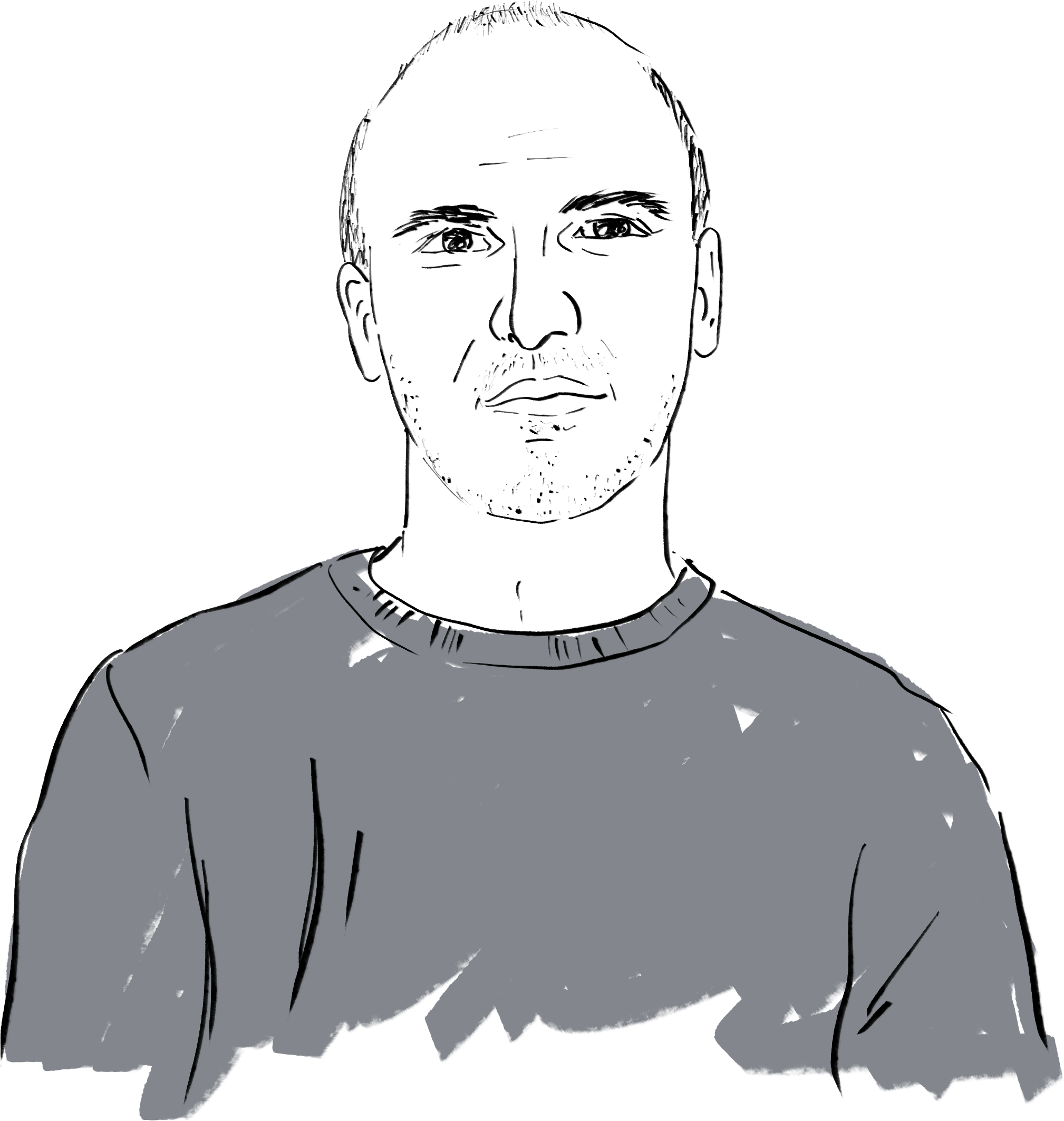
Mark Hay is a Brooklyn based freelance reporter who's covered food science, culture, and history for outlets like Atlas Obscura, Serious Eats, and VICE.
