
The Assignment
By Jennifer Dickinson
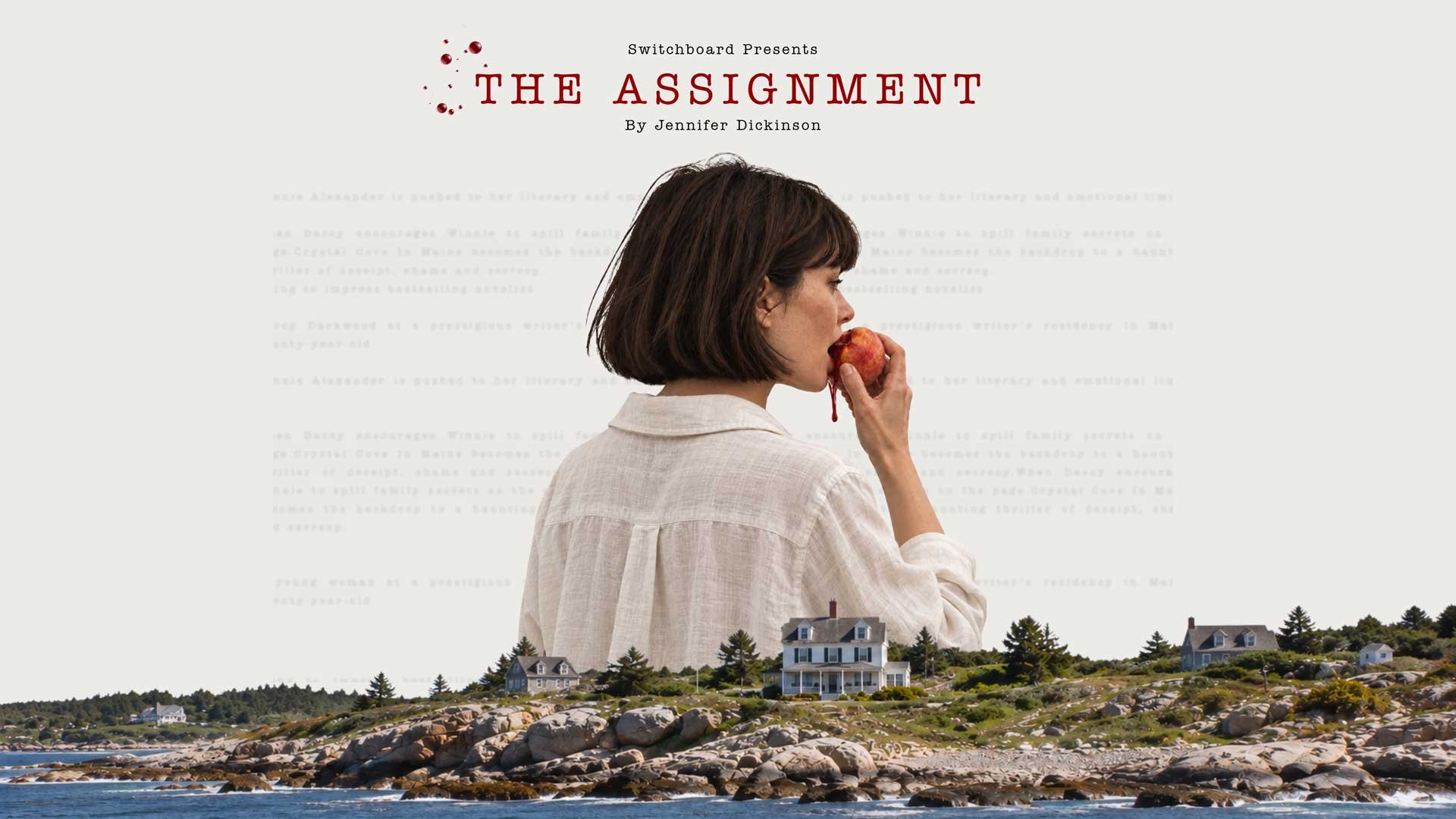
It had rained all afternoon in Crystal Cove, the way it had the night of the reading a year ago, and now the clouds had pulled back and the full moon had the whole place to itself. I could have walked the campus blind-folded by now and found my way. I knew every part of the landscape: the lawn running down to the lake, the white houses with their green shutters, the theater at the far end already lit up for tonight. Townspeople were coming up the road in twos and threes with umbrellas they didn't need anymore. The humid air smelled like wet grass. I stood on Nell's porch steps in the dark, where I'd come to breathe, gripping my pages. The eaves were still dripping, and the drops spotted the paper and blurred the type. It didn't matter that the words were smeared. I'd practiced the lines so many times I could have sung them.
The door beside me creaked open, waking the security light, and Nell Ashby appeared, her salt-and-pepper braid cascading down her back. She wore what she called her marry-me-bury-me heels.They were red satin, reserved for special or solemn occasions, and tonight’s occasion was me.
This evening, I’d borrowed the black velvet dress Nell had worn to her own book launch party twenty-five years ago. The dress was a little big, and I pulled up the corners of the sweetheart neckline and nestled deeper into the fabric.
“The vampires are restless, Winnie,” she said, studying me. She was probably searching for any sign that I might bolt. It was true I’d been throwing up all morning. But I’d never leave on a night like this. I was scared, not stupid. My book was the most important thing to me now. It was the only thing that mattered. Nell pushed a strand of hair from my face and pulled me in for a bony hug. She smelled like oranges. I remembered our last residency meeting, watching her light the candle on her coffee table, as I began to read.
One Year Earlier
“Benjamin and I fucked a bunch of times down by the lake,” I said proudly. “Soon the clouds grew heavy and rain fell over our twisted, sweaty bodies. We were drowning in desire.”
I paused, having purposely written the scene to feel over the top, hoping for a laugh from Nell. I was always hoping for a laugh from Nell. My whole life, people had told me I was funny. My Southern lilt helped. People liked the way I said “peanut” because of how I drew out the “pea.” They didn’t know it was on purpose.
But Nell didn’t smile. She faced me from the perch of her maroon office chair and steepled her fingers. “Winnie, this isn’t good. In fact, these new pages are weird.”
“You said I should change genres,” I said, closing my notebook.
“Not to romance. I was thinking…memoir,” she said. Then she sighed. “The reading is in just a few days. Maybe you should go home for now,” she said. “Maybe I’m not the right teacher for you. There’s another professor coming on in the next session. Would you like me to see if he has room?”
In the past, Nell had gotten furious, pacing, asking me terrifying questions about my past, but today she stared at me like a deflated balloon. If I left early, I’d miss the final reading in the theater, the showcase of our work to the town and other residents. The workshops with Nell over the past five weeks were all leading up to this and it was only a few days away. I couldn’t miss it, and I was determined to write something worthy of the event. I shook my head.
“No, Nell,” I said. “Definitely not. I can do better. I’ll do better.”
Nell Ashby’s books had gotten me through the shittiest times in foster care. I'd memorized whole pages. I considered reciting one right there, anything to prove I loved her, but she was already up and pointing me to the door.
“Get to work then, Winnie” she said. “Surprise me on Saturday.”

I left Nell’s house and ran past the other white clapboard houses with green shutters that were dotted around the campus. I sat down in one of the Adirondack chairs and stared out at the lake. Ava, Farah and Katherina waved to me from the kayak dock. In the four weeks we’d been together as writers at Crystal Cove, the three of them had begun to feel like sisters to me. Especially Ava, because we were roommates. I waved back, watching as they climbed into kayaks and began to paddle across the dark water.
How was this my life? I still couldn't believe I was in Maine at all. When the paperwork came, it said we'd be flown to an island off the coast of Maine on a private plane, I read that line over and over and decided the whole thing had to be a scam. Who puts twelve nobodies on private planes? Where I'm from, an offer that good comes with a starter kit of essential oils and a girl from high school who wants you on her team. But this offer was coming directly from my favorite writer, Nell Ashby, whose award-winning novels had saved me from slumps of depression during my teenage years. She'd made a career out of doing what nobody expected and nobody could explain, and I decided that if it was a scam, at least it was hers.
A month ago, the eleven other people in this program were strangers. Now they were the closest thing to family I'd had in years.
My short stories about Dollar General were about the people in my community and I couldn’t imagine how writing about their lives had earned me a spot at Crystal Cove, where the word “Believe” was written on a sign as you walked onto the campus and on the walls of classrooms and above the menu in the dining hall, even on the coffee mugs. It’s like whoever owned the place knew I had to be reminded to believe this was real. Constantly.
Nell had picked us out of thousands. That was the phrase everyone used, thousands, the way you'd talk about a lottery, and I suppose it was one. But I'd never won anything in my life.
Somebody had to pay for the private plane, and that somebody was Belle LeBlanc. Crystal Cove had been a girls' camp for a hundred years, until the girls stopped coming after a flood nearly destroyed the entire property and claimed with it the lives of fifty campers. Belle bought the whole thing, theater and dormitory and the headmistress's house, and for five weeks every summer, since 2016, a different writer brought in a fresh crop of writers.
This year the chosen writer was Nell Ashby.
Belle was ancient and white-haired and walked with a cane, a socialite of the kind I’d only seen on TV, and her face had been lifted so many times it no longer took part in anything she said. She gave a speech the first night in the dining hall while I devoured a filet mignon with rosemary potatoes, the first filet mignon of my life. She raised her cane at us. She said we were going to 'tell our impossible stories.' We were “going to 'set the literary world on fire.”
It sounded more like a threat than encouragement. I swallowed my steak and decided not to think about it.
Nell, it turned out, didn’t want fire. She wanted blood.
“Bleed on the page,” she said to our group at our first class. “Best high in the world. Get raw. It’s restorative.” She talked like someone giving lessons off the back of a motorcycle, cigarette in the corner of her mouth.
Everything I knew about her when I arrived had been cobbled together from the back flaps of her books. She lived in a log cabin on a river in Virginia. She didn't give interviews. She'd won every major literary award and then never showed up to collect them.Every six years or so she finished a new novel and a bidding war ensued. There was one author photo, the same on every book, twenty years old at least, and in ninth grade I'd taken it to a Supercuts and asked for Nell’s haircut. I’d worn my black hair in a bob ever since. Nobody knew if Nell had a family. Nobody knew if she had anyone.
The last time I saw my mother, she gave me a small press edition of Nell’s first book. When I asked Nell to sign it the first day of the residency, she’d thrown her arms around me and exclaimed that she hadn’t seen this particular version in years. I told her I was going to write bestsellers too, and that she was the reason. She liked that.
I hadn't applied to Crystal Cove. Eric, my store manager at the Dollar General where I worked, applied as me with one of my short stories and, I have to assume, a lot of lies about my confidence. He owed me. I’d shuttled him to AA meetings, sat with him while he journaled about the wrongs he’d done to people, and stayed in the car while he made amends to his mom for drinking. One day six months ago in the dead of winter, he’d shown up to work and found me cleaning the storefront window with a toothbrush.
“You’ll never get out of this town if I don’t find a way for you to escape,” he said.
Even after the plane and the campus and Nell herself turned out to be real, I assumed the five weeks would be a waste. In our first workshops I kept dropping my pen while she told me there was more in me. I believed her. I just didn’t know where it lived.
One evening she found me in an Adirondack chair, staring at the lake. “Write about you, Winnie Alexander,” she said. “Put yourself in those stories.” I didn’t want to. My past was too sad to be useful to anyone. It was the reason I was cleaning windows at the Dollar General with a toothbrush.
Ava, my roommate, said Nell loved every page she turned in. Farah was bleeding, apparently, in her novel about a family of foxes. Katherina was bleeding over her dead brother in her memoir. Everybody was bleeding but me, and Nell said so in class, in front of everyone, in the voice she used for questions that weren't questions. "What's your deal? What secrets are you hiding?" I had five days to come up with an answer.
Back in my room, I found a note on my bed from Ava. “Down at the beach.”
I swam in the ocean with Ava, Farah, and Katherina. Then I sunned myself on a towel beside Ava, who sprayed her long blonde hair with lemon juice to attract highlights from the blazing sun. When she asked me how the meeting with Nell went, I couldn’t bear telling the truth. It was too embarrassing. So I said, “good,” and Ava bragged about how much Nell loved her pages at their last meeting. I knew not to ask Ava what she was writing about; residents weren’t allowed to discuss their work with one another. Nell said: “You’re here to learn from me.”
That evening, the girls and I shared a pizza at Rosario’s. The owner knew us and brought us a shrimp scampi-dotted pie without asking. Afterwards we shared a bottle of Malbec back by the ocean and lit a fire when it got dark. It was my idea to go skinny-dipping under the full moon and we bobbed over the waves while Farah and Katherina shared stories about where they’d come from. None of us knew each other when we arrived and I loved hearing about Farah’s beloved aunties in India as she gestured wildly with her red fingernailed hands. Katherina talked about her boyfriend back in Sweden, how they had matching tattoos of swans because of the lake they lived beside.
“But ladies,” Farah asked in an ultra-serious voice, “do you Believe?”
We made vomit noises.
“We should get matching tattoos on the last day,” Ava said, twisting her dripping hair into a bun. “Fangs. Since Nell’s been feeding on us since we got here.”
“Blood on the page,” I said. “Perfect.”
Later, alone with Ava in our bedroom, I told her stories from my life.
This was how it always started.
“Winnie, help me sleep,” she’d say after we’d brushed our teeth and gotten into bed. She had insomnia and said my stories helped calm her mind.
But tonight, after too much wine, I found myself talking about one of the darkest periods of all with Mom. Tears slipped down my cheeks as I whispered the details in the darkness. When Ava snored, I wiped my face, surprised that trauma could bore someone to sleep, but also grateful. I’d grown to care about Ava.
Before our friendship, I’d avoided girls. My foster mom, Micah, told me I could share anything with her. Then I told Micah my most shameful secret, and she sent me back to the system, claiming that a Christian woman like herself couldn’t house someone unrepentant. That word “unrepentant” hung me up. I was supposed to be sorry for what my mother had done to us to ruin our lives? I promised myself I would never trust anyone again after that, and here I was whispering private things in the darkness to a girl I barely knew. Somehow this seemed okay.
Still, I would never tell Ava what I’d told Micah. I would never tell anyone again.
In our next class, Nell gave us a new assignment: get invited into a stranger’s house for dinner and write a story about the experience. Nell called it “The Vampire Assignment.” I was hopeful this would help me land on a new story to surprise Nell with at the reading, which was now three days away. I was still utterly blocked. Nell said we needed to do the assignment in pairs. Ava and I teamed up.
We met at the entrance to campus an hour before dusk. The sky had faded to lavender and fireflies lit up the air.
As we walked the six blocks into town, Ava asked thoughtful questions and I talked. A lot. She was always interested in me - and me in her. We had a lot in common. We’d both grown up in foster care in small Southern towns. I told her about the three weeks in tenth grade I’d spent in a house as spotless as the ones we were passing, where every armoire turned out to have a doll in it. I widened my eyes and stretched my mouth into a doll’s smile.
“They all looked like this,” I said. Ava giggled.
“I don’t think anyone from my town has ever eaten a lobster taco,” she said. “Or lobster, period. Half of them wouldn’t know what the word meant.”
We both laughed.
“Yeah,” I said. “Same in my town.”
We stopped in front of a house that resembled a lighthouse. It had actual turrets and a light glowed near the top of the tower. A telescope stood on the front porch.
“I’m sad about leaving next week,” I said. “I’ll miss it here.”
“Me, too,” she said. “But we’re best friends forever, right?”
Ava said this a lot. I think she liked saying it as much as I liked hearing it. Neither of us had gotten one the first time around. In foster care you get a best friend for a placement, and then you get moved. I noticed a couple on the other side of the street standing in their front lawn next to wooden buckets filled with red roses. The man held a shovel. The woman’s arms were crossed. I elbowed Ava and approached them.
“I like your roses,” I said. “Marilyn Monroes?”
One time, the Dollar General accidentally got a shipment meant for a nursery three towns away. The roses were as big and red as tomatoes. Soon my whole neighborhood was walking around with the most gorgeous red roses. They wore the flowers in their hair, lapels, tied to their bags. For a week, our small town felt fancy. “See? She knows. This young girl. You can’t get rid of them, Dale Bird,” the woman said.
I turned my head and mouthed: “Dale Bird?” to Ava and she cracked a small smile.
“Lillian, you’re being unreasonable,” the man said.
“Why do you want to get rid of the flowers?” Ava asked.
Dale Bird took a long pull of his Coors Light.
“His sister just died and she loved red roses, so now whenever Dale Bird sees them, he remembers she’s gone.” Lillian rested her hand on Dale Bird’s shoulder.
I noticed the large silver cross on the front door. I lifted my head to the darkening sky.
“Dear Lord, help Dale move through this time of mourning,” I said and when I noticed Lillian’s inquisitive look, I looked to Ava for help.
“We’re the daughters of Pastor Eli, a few towns over,” Ava announced.
I felt my eyes widen. This was fun.
“Dad just accepted the job,” I said. “We’re just takin’ an evening stroll to pray for the community.”
I watched as our words settled over Lillian and Dale Bird. Their eyes grew soft and friendly. Their postures loosened. This gave me courage.
“Your home is so lovely,” I said. “I’ve always wanted to know what a real Maine house looks like inside.”
“Yes, we love those, especially all the shiplap and barn doors,” Ava said. “Heavenly.” We’d been getting high and streaming old episodes of Fixer Upper in the community room of our dormitory back at Crystal Cove, remarking how much we hated the way the houses were decorated.
“I was just about to make some crab cakes. Why don’t you two stay for dinner?” Lillian asked.
On the way into their house, Ava and I exchanged a triumphant glance.
Eventually everyone was drinking Coors Light in the shallow end of Dale and Lillian’s heated pool. Dale, after a few more beers, decided he could live with the Marilyn Monroe roses. Ava told the group about the time she got bitten by a snake in the Grand Canyon and, while Dale told his own snake bite story, Lillian confessed to me that she dreamed of picking up and going to Buenos Aires one day because she saw a woman in a movie do it once.
“But I’m fifty-eight,” she sighed. “Too old to do things like that now.”
“Fifty-eight isn’t too late to follow your dreams,” I told her. Mom had always talked about women like Dolly Parton and a poet named Joy Harjo as her heroes. Women who made being an artist a priority and didn’t take shit from other people.
“She’s not going to Buenos Aires or anywhere far away,” Dale said, swimming over to Lillian. He threw an arm around her shoulders. ”She’s scared of planes.”
“Never been on one,” Lillian sighed. “Don’t let fear hold you back, girls. This is your sign.”
I thought of Nell telling us for weeks to go at our darkest stories. I knew what mine was.
“Don’t you get bored going to church all the time?” Lillian asked.
“I do,”Ava said. “We both do.” She gestured to me. “That’s why we are always looking for adventures.”
Lillian smiled at me. “Let’s go in and have dessert. Dale, can you grab towels?”
They exited the pool, leaving me and Ava. She swam over to me.
“You think we completed the assignment?” she asked.
“Let’s get a selfie as proof,” I said.
After plates of apple pie and ice cream, Dale, Lillian, Ava and I crowded together for a picture by the back deck. I wedged myself between Lillian and Ava and caught a whiff of Lillian’s hair. Vanilla. Like Mom.
Later, sitting at my desk in my dorm room, after I was sure Ava was sleeping, by the light of my phone, I opened to a fresh page in my composition book.
Mom used to buy vanilla extract from the drugstore and dot it behind her ears when she couldn’t afford perfume.
Tears streamed down my cheeks. I shut the composition book and went to bed.
I still couldn’t bleed on the page.
The evening of the reading, rain fell in sheets. The event had to be moved from the glowing green lawn to the theater, the only space large enough on campus to accommodate the townspeople and Nell and us. Out of the corner of my eye, I spotted Lillian and Dale. I almost waved to them before remembering I was supposed to be at a church with Ava a town away.
Rain pattered against the stained glass windows as I took my place in the first pew, seated between Ava and Katherina. Ava squeezed my hand.
“Break a leg,” Ava whispered. I squeezed back. I was eager to hear Ava’s pages. She was writing fiction, most likely inspired by her own experiences in foster care. She’d told me some pretty hideous stories about cockroaches and dirty clothes, things that had happened to me too. At our last class meeting, Nell had implored us: “Move someone. That’s your only job.”
Nell walked to the podium and spoke into the microphone: “The past five weeks have been a pure pleasure. The talent is unmatched here at Crystal Cove. I’m grateful for the opportunity to have worked with and tended to these brilliant, young minds. Tonight you’ll get a taste of that brilliance. Katherina Bates, you’re up first.”
Katherina read from her memoir, pulling a red silk handkerchief from her pocket and wiping her eyes as she detailed the suicide of her brother and the butterfly that landed on her cheek at his funeral. Farah read from her children’s fantasy novel, pacing the stage as she read, a real performance. She’d memorized her words and when she got to the part about the fox learning to fly, a child behind me exclaimed: “GO, LITTLE FOX! GO!” The crowd erupted in laughter.
As Ava approached the podium, she locked eyes with me. I was struck by the seriousness of her expression. It was almost as if she was about to deliver bad news. Lightning cracked, startling the room.. Then the lights went out and everyone sat in total darkness.
Leave it to Nell to come prepared. She lit one of her orange-scented candles and placed it on the podium next to Ava, who whispered, “thank you.”
“My name is Ava Duprix. This is from my novel.”
Ava paused and I leaned forward in my chair, eager to hear what Ava had been working on during these past weeks when she’d sat on her bed, typing furiously on her laptop.
Ava read in a faux Southern accent so sugary sweet she could have been sucking on caramel candy. “My mama, Cheryl, loved karaoke night at the Civil War Puppy Bar, down the road from our trailer. Joan Jett’s I Hate Myself For Loving You was her anthem and this was what she was singing the night I appeared. There were ten inches of snow on the ground that night. An old truck that barely started got my single mother to the hospital.”
Ava paused. Lightning cracked again. My heart pounded. This was my story.
“As I grew up, Mama tried her best to get me to sing with her, hoping for blood harmony.” Ava paused and looking directly at the audience, continuing in the same ridiculous accent, “Blood harmony is the idea that those who are related have a natural ability to sound like honey trickling through the air.” She smiled and continued. “But there was no honey in the air when I let loose, just mud. Not like Mama.”
“Sit down,” Katherina said, tugging on my hand. I hadn’t realized I was now standing up. I sat back down, the sound of television static filling my ears.
“What’s going on?” Katherina asked me.
“Mama tried out lots of names for her act before settling on “Mama Louder” because that’s what I always told her to do when she was performing. Mama Louder was just about to break when she was nineteen. She had an appointment with a producer in Nashville, when the drunk guy barreled into our car going ninety. I was fine. Mama was not. She broke her back and for a while could barely crack out a note.”
Here Ava paused again before creakily singing the first line of “I Hate Myself For Loving You,.” A few people giggled uncomfortably.
“She couldn’t remember who I was so I sat beside her bed for a year, waiting for her to remember,” Ava said. “Eventually Mama left the hospital but she had a limp that would never go away. She stopped playing music. When she was just shy of twenty-one and I was seven, she disappeared.
I tracked her down to the bus station, where I found her playing music, her guitar case open in front of her for donations. She refused to come home with me. After a few months, Mama was on the streets, clearly addicted to something. She stood out front of the Dollar General waving her arms and folding at the waist, like one of those inflatable tube men whipping around outside car dealerships. Eventually, Mama disappeared for good. She was spotted by neighbors here and there, but gone. At least, gone from our life.”
Someone behind me drew in a breath. Sniffling. Ava squared her pages, finished. People clapped, and when I turned I saw wet faces in the dark. My life, in Ava’s mouth, had moved a room full of strangers. She might as well have burned my pages. I jumped from my seat and ran for the hallway. Nell was close behind me.
“You’re up next,” she said gently. I turned on my heel and faced my literary idol.
“That story Ava read. It’s mine.”
“What are you talking about?”
“The missing mother story” I said. “It all happened to me.”
I expected this would surprise Nell, but she was unfazed.
“So?” she asked finally.
“So, she stole my story.” I was crying now.
Nell was quiet, studying me. Then she crossed her arms. “Then why did I have to hear it from Ava?”
I didn’t answer.
“Five weeks, and you’ve been handing me stories that don’t matter. I picked you out of a pile because I thought there was more in you than that. I thought you had a book in you. Ava just proved I was right about the book and wrong about you.”
She left me in the hallway. I stood there shaking until the foyer filled with people and I realized I hadn’t moved. Then I walked back to my room.
Ava showed up hours later, her cheeks flushed. When she saw me, she spoke fast.
“My dad hugged me for the first time in my life,” she said.
“I thought your parents were dead,” I said. We had bonded over our messy childhoods and I’d started to feel like she was the only person in the world who had as fucked up a past as me. Ava fell back on her bed and exhaled, filling the room with the smell of whiskey.
“Why did you do it?” I asked. My voice cracked on the last word.
She sat up and hiccuped. “What stories do I possibly have to tell? Belle LeBlanc is my grandmother, and my parents still had to pay Nell a hundred thousand dollars to get me in here. Nobody has ever believed in me. Now they do.” She grinned at me like I should be happy for her.
“You can’t have my story, Ava.”
“It’s too late. An agent already took a bite,” she said. “Like I’m a peach.”
“We’re not best friends forever anymore,” I said. I regretted the words immediately because Ava laughed. Her laughter made me furious.
I flew back to the theater. The candle was still on the podium. I lit it, sat on the edge of the stage with my notebook, and smoked a joint. I closed my eyes and breathed in vanilla. Then I didn’t just bleed on the page. I bled out.
I started with the phone call.
“911, what’s your emergency?”
“Me. I’m the emergency,” I said. “I’m twelve and my mother just took a bunch of Oxy and my essay on Kate DiCamillo is due and we need to go to the grocery store so I can get brownies for homeroom tomorrow. It’s my turn to bring in treats. My mother says she can’t drive but I can. She taught me once. You can find me at the Target on Mandarin Avenue, in Guest Services. I need a new home. You can find her on the floor in Apartment 12 at 1622 Shepherd Street.”
Mom’s blue eyes filled with tears and she tried to get up, but of course she couldn’t.
“You’re a joke for a mom,” I said, and grabbed her keys.
I wrote about Ella, the first foster mom I was placed with after making that call, who put me on a cot in a basement with no heat. I wrote about getting sick down there with nobody checking on me, and the ER, and the pneumonia, and how fast I wanted that phone call back.
At dawn, exhausted, I shoved my new pages under Nell’s door with a note: “Here’s your blood, you fucking vampire.”
Then I walked the mile to the Crystal Cove bus station in the blue morning light, dragging my suitcase behind me. I’d miss Nell’s last class, where everyone would read from their vampire assignments. I wondered what Ava would read, whether she’d show the selfie we’d taken and pretend we were still friends. I thought of Lillian, and the smell of vanilla came up so strong it gagged me, and I cried the rest of the way. If feeling ruined was the secret to being a real writer, I didn’t know if I wanted to be one.
There was no private plane home. Just thirty-two hours to think about how I’d made my life even more fucked up than it already was.
I returned to the Dollar General, picking up extra shifts so I wouldn’t have to spend any time alone at my apartment. Weeks passed. Ava and Katherina both texted me multiple times and eventually I blocked them. Going to Crystal Cove was a mistake, but I filled Eric with stories about lobster tacos and swimming at the beach. I didn’t want him to feel bad.
One night, staring up at the stars, I read to him from the pages I’d left for Nell. Because he’d asked a few times and because I’d written them in essentially a dream-state. I didn’t know if they were bad or good. After I finished reading, Eric held me tightly.
Bleeding on the page didn’t feel restorative, as Nell said it would feel. All the blood had been drained out of me. There was nothing left.
The next afternoon I walked home from the bus stop. When I reached my building, Nell was sitting on the steps. She looked small against the brick building, her greying hair fell in waves. “I want to take you somewhere,” Nell said, standing.
“Why?” I asked.
“To celebrate,” she said. “I love what you wrote.”
I exhaled the breath I didn’t realize I’d been holding. I climbed into her sedan.
“Do you think you can finish it?” she asked as she pulled out of the parking lot.
I had felt brittle since I wrote the story, like my insides were made of sandpaper. I shook my head. I told her I didn’t know.
“I feel ashamed of what I wrote,” I said softly.
“Shame is a powerful force,” she said. “If you’re brave enough your story can be truly special. You can re-claim your story from Ava. Don’t you want to do that?”
I was quiet as she continued driving.
“Your friend Eric wrote about your mother when he applied for you,” Nell said. “Did you know that?”
I shook my head. Eric told me he’d just sent in a sample of my work. What had he told Nell? He should’ve written that Mom was probably dead and I was the reason. This pummeled my insides every day. This was the real reason I never left Georgia. I hoped one day my mother would return.
Nell passed a photo to me. A young girl stood on the beach at sunset in a long black coat, smoking a cigarette.
“My sister, Amelia, and your mother are similar,” Nell said. “They had the same issues.”
“Why have you never written about your sister?” I asked.
“Because I’m not brave enough,” she said. “But you are. I can’t tell my story, but you can tell yours. It helped me. It will help other people.”
As she drove, Nell talked more, gesturing with her hands so much I worried she might lose control of the car. I felt helpless watching her maneuver the steering wheel, the way I’d felt so many times when I was small and my mom drove us high.
Nell continued, her voice growing louder. “This is the big time. Are you ready to go down some messy paths in service of writing the best story possible? I’m gonna push you and push you and push you to unearth all of your demons.”
My demons. I didn’t know if I could return to them. The paths weren’t just messy, they were catastrophic. Mom never showed up on parents’ nights and the one time she remembered, she interrupted Ms. Cassie’s speech about her classroom and told her she’d just had the best sex of her life while the other adults whispered and I ran out of the room. Once Mom let our kitten out in the middle of the night in a snowstorm and I woke to a frozen cat on the front porch. Then there was the parade of boyfriends who only wanted to get high with her and ignore me. And she did ignore me. She ignored me so much our refrigerator was perpetually empty, I existed on packets of crackers I learned how to steal from the school’s vending machines. There was so much bad, mining it would be more than difficult, I feared it would drive me mad.
“…I want you to finish what you started, Winnie. What do you think?” Nell asked, easing to a stop. “I want to help you write a bestseller.”
As much as I hated to admit it, the words “write a bestseller” lit my heart up in a neon pink glow. Did Nell really think I could do this? Did she believe in me this much? I’d never heard her say anything about a bestseller to the other residents at Crystal Cove. I pictured Ava crawling on her knees to my book signing. We were never best friends. She’d lied to me the way my mom had lied to me so many times. And I’d fallen for it. Fuck.
“Yes I can,” I said, suddenly noticing my surroundings. We were in the driveway of a beaten-up looking house with a sagging front porch, so different from our lodgings at pristine Crystal Cove. Surely she didn’t think I’d finish my book here.
“Good. Because I have a surprise for you,” Nell announced.
“Where are we?” I asked.
“We’re picking up another passenger,” Nell said.
A woman came out of the front door. I recognized her reddish hair, her blue eyes.“Where is my girl?” the woman called out hoarsely. She immediately began to wring her hands. It was her habit the few times she got clean.
My girl. The words pierced my newly neon pink heart. I’d heard her voice so many times, in my ears, close-up in bed when she read me Dr. Seuss books, when she soaped up my back with a washcloth when I was little.
There had been good times, too, and that’s why it was all so fucked, why the paths I’d write about wouldn’t just be full of demons. They’d also be full of jumbo cherry Icees at midnight from 7-11 in the dead of winter while we sang along with Phil Collins in the aisle. She’d serenaded me with “One More Night,” a beef jerky as her microphone. Tears spilled down my cheeks. My mother walked toward the car.
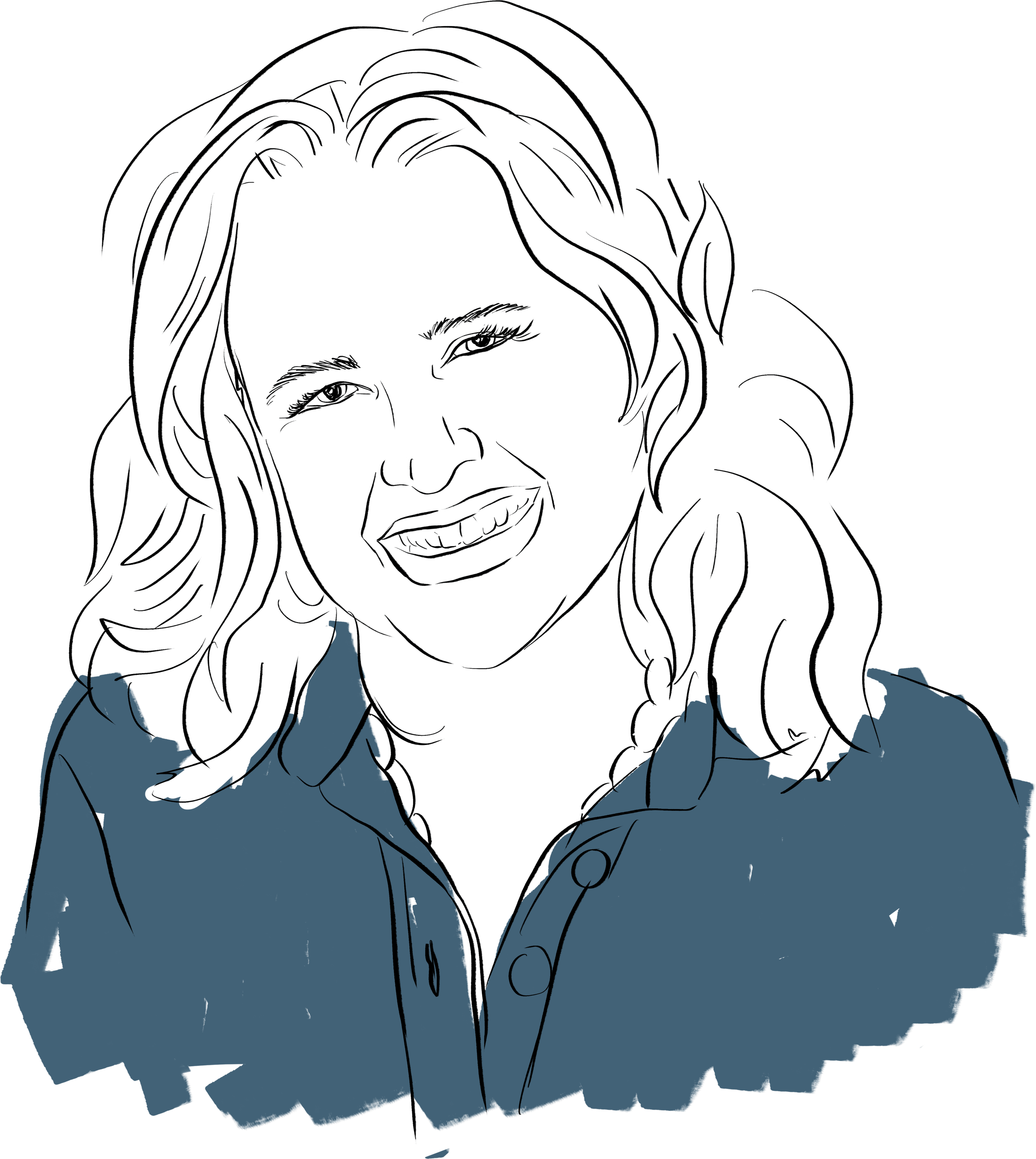
Jennifer Dickinson is a graduate of Hollins University. Since 2015, she has worked as a book coach and writing teacher for women in Los Angeles. Her fiction has appeared in The Florida Review, JMWW, Maudlin House, Isele Magazine, Blackbird, and elsewhere. Her nonfiction has appeared in The Linden Review and Poets & Writers magazine. She is the recipient of writing residencies at Storyknife and Hedgebrook and a grant from the Barbara Deming Memorial Fund. Her debut middle grade novel was published in April 2026. Connect with Jennifer at jenniferdickinsonwrites.com
